
Software Development
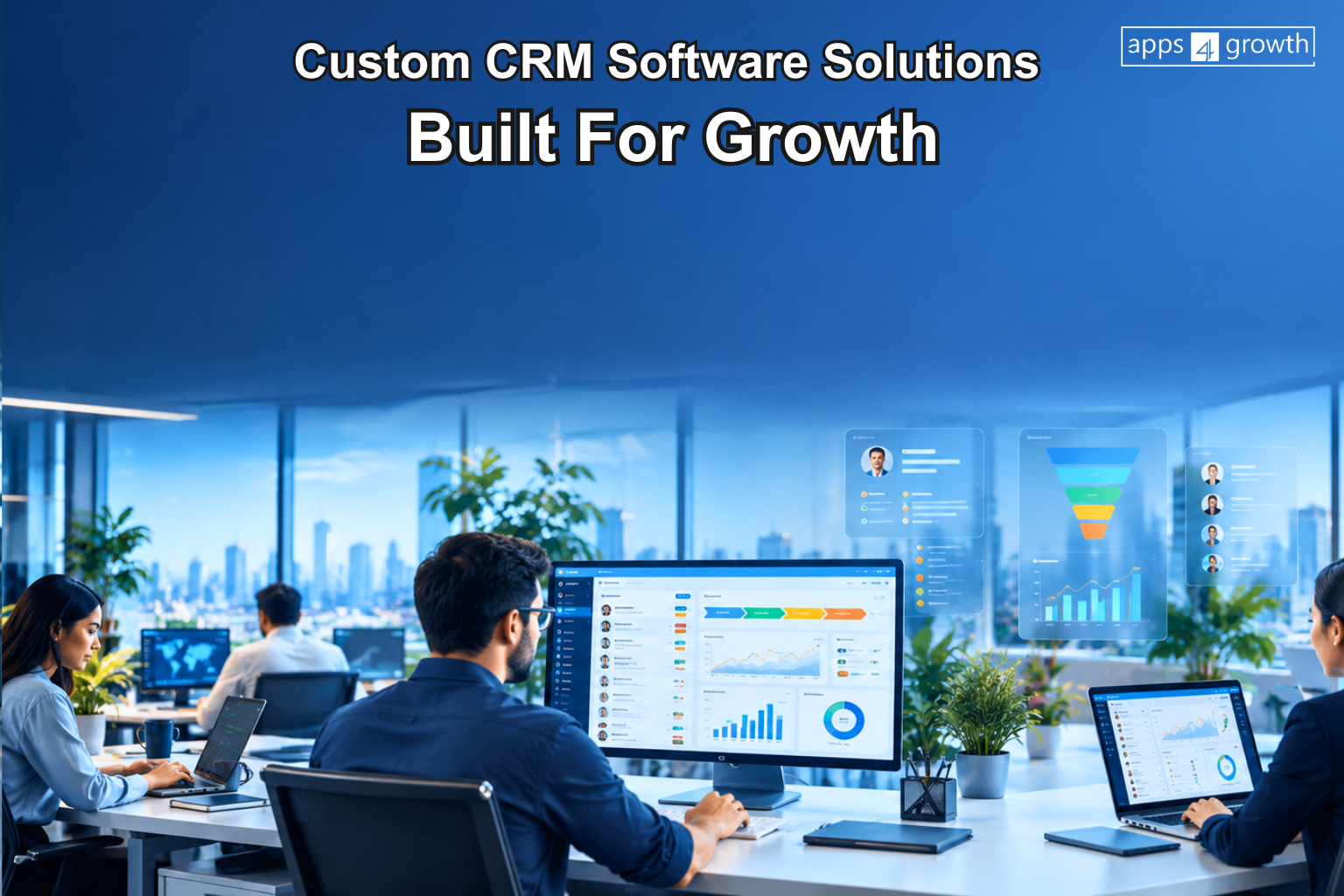
Custom CRM Software Development for Business Growth
Businesses deal with leads, customers, sales activities, follow-ups and internal teams every day. When this information stays across spreadsheets, emails and different applications, managing customer relationships can become difficult. Custom CRM software development gives businesses an opportunity to bring these processes together in one platform designed around their specific requirements.
Unlike generic CRM platforms, a custom CRM can match the way a business actually operates. apps4growth helps businesses build tailored CRM solutions with the features, workflows, integrations and dashboards they need, instead of forcing their processes to fit a pre-built system.
What Is Custom CRM Software Development?
Custom CRM software development is the process of creating a customer relationship management system specifically for a business. The software can be designed around the company’s sales process, customer journey, team structure and operational requirements.
A custom CRM can help businesses manage customer information, track leads, monitor sales activities, automate follow-ups and generate useful reports from a centralized platform.
For example, a company with a complex sales process may need custom lead stages, approval workflows, automated notifications and role-based dashboards. A standard CRM may not provide these features in the exact way the business requires, while custom development allows the system to be built around those needs.
Why Businesses Need Custom CRM Software
Managing customer information manually can create unnecessary work and increase the possibility of missed follow-ups or inconsistent data. A centralized CRM can make customer-related information easier for teams to access and manage.
Custom CRM software can help businesses:
- Organize customer and lead information
- Track sales opportunities
- Manage follow-ups and tasks
- Automate repetitive activities
- Monitor team performance
- Create business-specific reports
- Connect different business applications
- Improve customer communication
The biggest advantage is flexibility. Businesses can build a system that supports their existing processes rather than completely changing those processes to match a software product.
Custom CRM vs Ready-Made CRM
Ready-made CRM platforms can work well for businesses that need standard customer management features and want to start quickly. However, they may include features that a business does not need while missing workflows that are important to its operations.
Custom CRM software offers greater control over the system.
A business can decide:
- Which modules the CRM should include
- How users move leads through different stages
- Which activities should be automated
- What information different teams can access
- How dashboards should display data
- Which external applications should connect with the CRM
This flexibility makes custom CRM development particularly useful for businesses with unique workflows or specific operational requirements.
Key Features of Custom CRM Software
A custom CRM can include different features depending on the business model and objectives. Some commonly useful features include:
Lead Management
Businesses can capture leads, assign them to team members and track their progress through different sales stages. Automated reminders can also help teams manage follow-ups more consistently.
Customer Management
A centralized customer profile can store important information, communication history, activities and related records in one place.
Sales Pipeline Management
Teams can monitor opportunities through different stages of the sales process. Custom stages can reflect the actual workflow used by the business.
Task and Follow-Up Management
CRM software can help teams schedule calls, meetings, follow-ups and other activities. Notifications can remind employees about important tasks.
Reports and Dashboards
Custom dashboards can present sales performance, lead sources, conversion rates, team activities and other business information in an easy-to-understand format.
Automation
Businesses can automate repetitive activities such as assigning leads, sending notifications, creating tasks and updating records. This can reduce manual work and allow employees to focus on higher-value activities.
Third-Party Integrations
A custom CRM can connect with other business systems through APIs and integrations. Depending on requirements, businesses may connect email platforms, accounting software, payment systems, websites, mobile applications or other internal tools.
Benefits of Custom CRM Software Development
The value of custom CRM software goes beyond storing customer information. A well-designed system can support business operations and improve how teams work.
Better Data Management
A centralized system reduces the need to maintain customer information across multiple spreadsheets and applications. Teams can work with more organized and accessible data.
Improved Team Productivity
Automation can reduce repetitive administrative tasks. Employees can spend more time communicating with customers and working on sales opportunities.
More Personalized Customer Management
When teams have access to customer history and previous interactions, they can understand customer requirements more effectively and provide more relevant communication.
Better Business Visibility
Custom dashboards and reports can give managers a clearer view of sales activities, team performance and customer-related metrics.
Scalability
As a business grows, its CRM requirements can change. Custom software can be expanded with additional modules, integrations and workflows as those requirements develop.
Custom CRM Software Development Process
Developing a custom CRM requires more than simply building screens and adding features. The development process should begin with a clear understanding of the business.
1. Understand Business Requirements
The first step is to identify the business processes, users, challenges and CRM goals. This helps define which features the system actually needs.
2. Plan Features and Workflows
Developers and business teams can define modules, user roles, workflows, automation rules and integrations before development begins.
3. Design the User Experience
The CRM interface should make everyday activities simple for employees. Clear navigation and well-organized dashboards can improve adoption.
4. Develop the CRM
Developers build the required web or mobile CRM functionality based on the approved requirements and architecture.
5. Integrate Business Systems
The CRM can connect with relevant third-party tools and existing business applications through suitable APIs and integrations.
6. Test the Software
Testing helps identify functional issues, usability problems, security concerns and integration errors before launch.
7. Launch and Improve
After deployment, businesses can monitor usage and introduce improvements based on changing requirements and user feedback.
How Much Does Custom CRM Development Cost?
The cost of custom CRM development depends on several factors rather than a fixed price. The number of features, software complexity, integrations, user roles, platforms and development requirements can all affect the overall investment.
A basic CRM with lead and customer management may require fewer resources than a large platform with automation, advanced analytics, multiple integrations and mobile applications.
Businesses should therefore define their requirements first and then evaluate development costs based on the actual scope.
How Apps4Growth Can Help
Apps4Growth focuses on building software around how a business actually works instead of forcing businesses to change their processes to fit a generic platform.
Its custom software development approach can support custom CRM development, web and mobile applications, business process automation, product design and ongoing support.
For businesses that need a CRM connected with other operational systems, custom workflows and business-specific dashboards, a tailored solution can provide greater flexibility than a standard CRM.
The right approach starts with understanding the business process, identifying the most important CRM requirements and then building a solution that can grow with the organization.
Is Custom CRM Software Right for Your Business?
Custom CRM software can be a suitable option when standard CRM platforms do not provide the flexibility a business requires. It can also make sense when a company wants to connect customer management with its existing workflows, automation systems and other business applications.
Before starting development, businesses should clearly define their objectives, users, essential features, integrations and future requirements. This helps create a CRM that delivers practical value rather than unnecessary complexity.
Conclusion
Customer relationship management becomes more effective when technology supports the way a business actually operates. Custom CRM software development allows businesses to create workflows, automation, dashboards and integrations around their specific requirements.
With the right planning and development approach, a custom CRM can help businesses organize customer data, improve team productivity, automate repetitive work and gain better visibility into their operations. As business requirements evolve, the CRM can also grow with them.
FAQs
What is custom CRM software?
Custom CRM software is a customer relationship management system developed specifically around a business’s workflows, requirements, users and operational processes.
What are the benefits of custom CRM development?
Custom CRM development can provide greater flexibility, workflow automation, centralized customer data, business-specific reporting and integration with existing systems.
Can custom CRM software integrate with other applications?
Yes. Depending on the technical requirements, a custom CRM can integrate with websites, mobile apps, email systems, accounting platforms, payment solutions and other business applications.
Is custom CRM better than ready-made CRM software?
It depends on the business. Ready-made CRM software can work well for standard requirements, while custom CRM software offers more flexibility for businesses with unique workflows and integration needs.
How long does it take to develop a custom CRM?
Development time depends on the CRM’s features, complexity, integrations, platforms and business requirements. A clearly defined scope can help create a more accurate development timeline.