
ERP Software
How Can ERP Software Help Manage Your Business?
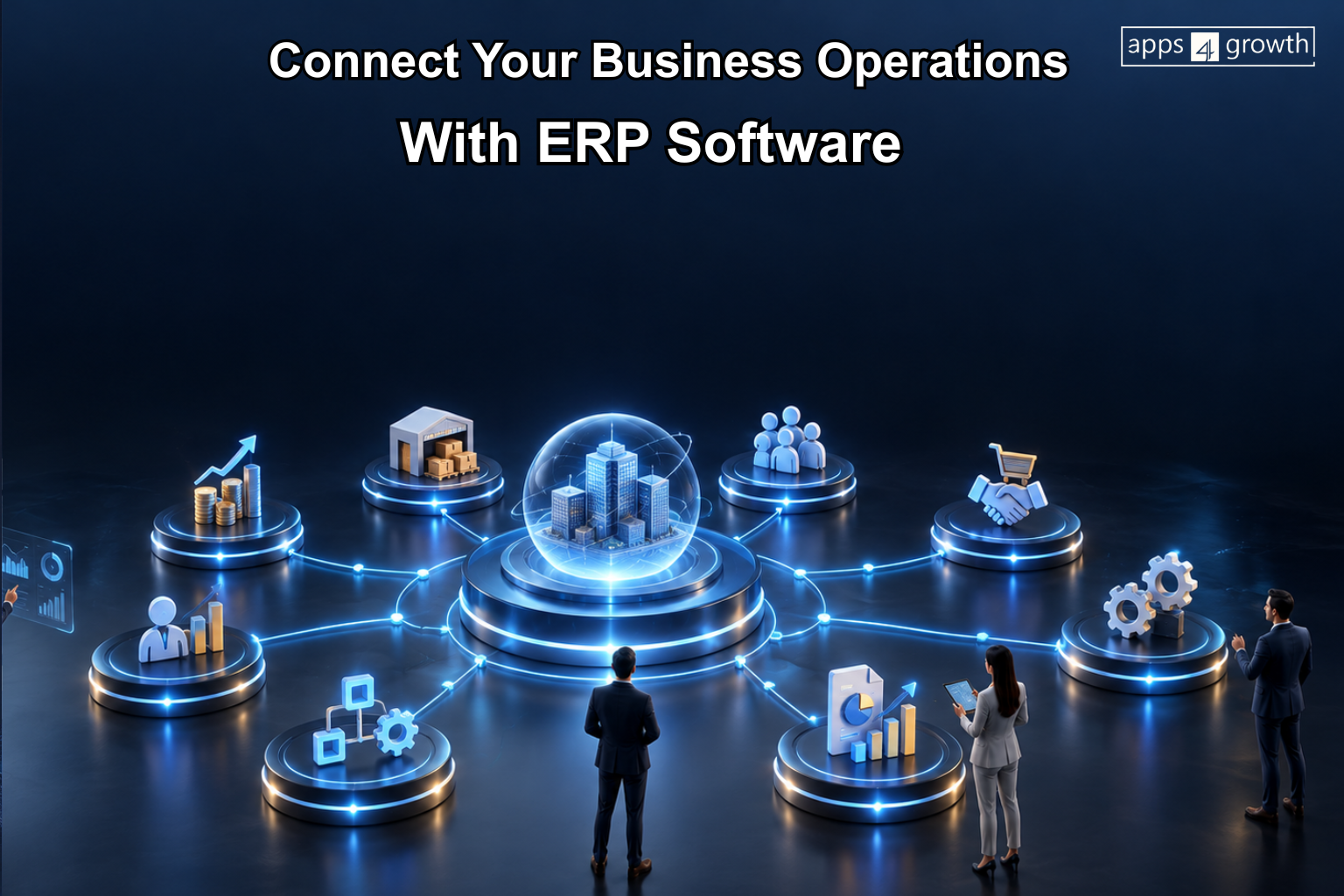
ERP software can help businesses manage different departments, processes, and resources through one connected system. Instead of using separate tools for finance, inventory, employees, sales, purchasing, and operations, an ERP system for business can bring important information together in one place.
As a business grows, managing different departments manually can become difficult. Data may be duplicated, reports can take longer to prepare, and teams may not have real-time information. apps4growth can help businesses implement the right ERP software for business to connect departments, streamline workflows, and improve overall operational efficiency. The right ERP software for business can help solve these challenges by improving visibility, coordination, and automation.
1. Manage Different Departments Together
One of the biggest advantages of business ERP software is centralized management.
An ERP system can connect different functions such as:
- Finance and accounting
- Sales
- Purchasing
- Inventory
- Human resources
- Customer management
- Operations
- Reporting
Instead of each department working with separate records, information can flow through a connected system. This gives management a clearer view of everyday business activities.
2. Improve Inventory Management
Inventory can become difficult to manage when businesses rely on spreadsheets or manual records.
With inventory management software integrated into an ERP system, businesses can track stock levels, purchases, sales, product movement, and inventory requirements.
An ERP can help businesses:
- Monitor current stock
- Track incoming and outgoing products
- Manage purchase orders
- Identify low-stock items
- Reduce duplicate entries
- Improve inventory planning
Better inventory visibility can help businesses avoid unnecessary stock accumulation and reduce the risk of running out of important products.
3. Simplify Financial Management
Financial information is an important part of business management.
An ERP can help organize financial activities such as invoices, expenses, payments, sales records, and financial reporting.
Instead of collecting information from different departments manually, management can access connected financial data through the ERP system.
This can make reporting more efficient and help businesses understand their financial position more clearly.
4. Improve Employee Management
Managing employees involves more than maintaining basic employee records.
An ERP can include employee management software features for activities such as:
- Employee records
- Attendance
- Leave management
- Payroll information
- Department management
- Employee performance
- Task tracking
When employee-related information is managed through a centralized platform, HR teams and management can access important information more efficiently.
5. Automate Business Processes
Manual processes can consume a significant amount of employee time.
Business process automation within an ERP can help automate repetitive workflows and reduce unnecessary manual work.
For example:
Purchase Request → Approval → Purchase Order → Inventory Update → Invoice
Instead of employees manually moving information between different systems, an integrated ERP can connect these steps.
Automation can also help reduce data-entry errors and make processes easier to monitor.
6. Get Better Business Reports
Business decisions are easier when managers have access to accurate and timely information.
ERP software solutions can provide dashboards and reports covering different parts of the organization.
Management can monitor information such as:
- Sales performance
- Revenue
- Expenses
- Inventory levels
- Purchase activity
- Employee information
- Business performance
- Operational activities
This can help businesses identify trends, monitor performance, and make more informed decisions.
7. Reduce Duplicate Data Entry
When different departments use separate software systems, employees may enter the same information multiple times.
For example, a sales team may record an order in one system while the inventory team enters the same information somewhere else.
An ERP system can connect these processes.
When information is updated in one part of the system, the relevant department can access the updated data. This can reduce repetitive data entry and improve consistency across the organization.
8. Improve Business Scalability
A business management system should be able to grow with the company.
As businesses expand, they may add employees, products, customers, locations, or new departments. Managing these changes through disconnected tools can become increasingly difficult.
A properly planned ERP system for business can provide a centralized foundation that can be expanded as requirements change.
This makes ERP particularly useful for businesses that are planning long-term growth and want their internal systems to support that growth.
ERP Software vs Separate Business Tools
Many businesses use different software for different departments. While this approach may work initially, it can create problems as the company becomes more complex.
Separate tools can lead to:
- Data duplication
- Limited visibility
- Manual data transfer
- Communication gaps
- Difficult reporting
- More administrative work
An ERP connects these functions through one system.
However, businesses should not choose an ERP simply because it has many features. The solution should match the company’s processes, team size, industry, and future requirements.
When Should You Consider Custom ERP Software?
Ready-made ERP platforms can work well for businesses with common operational requirements. However, some companies have unique workflows that standard platforms may not handle effectively.
In such cases, custom ERP software development can provide greater flexibility.
Custom ERP may be suitable when your business requires:
- Industry-specific workflows
- Custom dashboards
- Specialized automation
- Unique approval processes
- Multiple software integrations
- Custom inventory processes
- Specific employee workflows
- Business-specific reporting
With ERP system development, the platform can be designed around your existing business processes instead of requiring your team to completely change how it works.
How Apps4growth Can Help
Choosing the right technology partner is an important part of ERP implementation and development. apps4growth can help businesses understand their requirements and develop technology solutions around their operational needs.
Depending on the business, the solution may include ERP software development, system integration, workflow automation, dashboards, inventory management, employee management, and other business functions.
Working with an experienced ERP development company can help businesses plan the system architecture, features, integrations, user roles, and scalability requirements before development begins.
For businesses with specialized processes, ERP development services can also include custom modules and integrations designed around specific operational requirements.
Conclusion
ERP software can bring different areas of a business together and create a more organized way to manage everyday operations. From inventory and finance to employees, purchasing, reporting, and automation, an integrated ERP system can improve visibility and reduce manual work.
For businesses with standard requirements, a ready-made ERP may be sufficient. Companies with unique processes may benefit from custom ERP software development that is designed around their workflows and future goals. With the right ERP development company, businesses can build a scalable system that supports better management, efficiency, and long-term growth.
FAQs
What is ERP software?
ERP software is a centralized business management system that connects functions such as finance, inventory, sales, purchasing, HR, and operations.
How can ERP software help a business?
An ERP can help businesses centralize information, automate processes, improve reporting, reduce duplicate data entry, and coordinate different departments.
Is ERP software suitable for small businesses?
Yes. ERP software for business can be useful for small businesses when they need better control over finance, inventory, employees, sales, and operations. The system should be selected according to the company’s actual requirements.
Can ERP software automate business processes?
Yes. ERP platforms can automate workflows such as approvals, purchasing, inventory updates, invoicing, reporting, and other repetitive processes.
When should I choose custom ERP software?
Consider custom ERP software when your business has unique workflows, specialized requirements, or integration needs that standard ERP platforms cannot address effectively.