
Artificial Intelligence
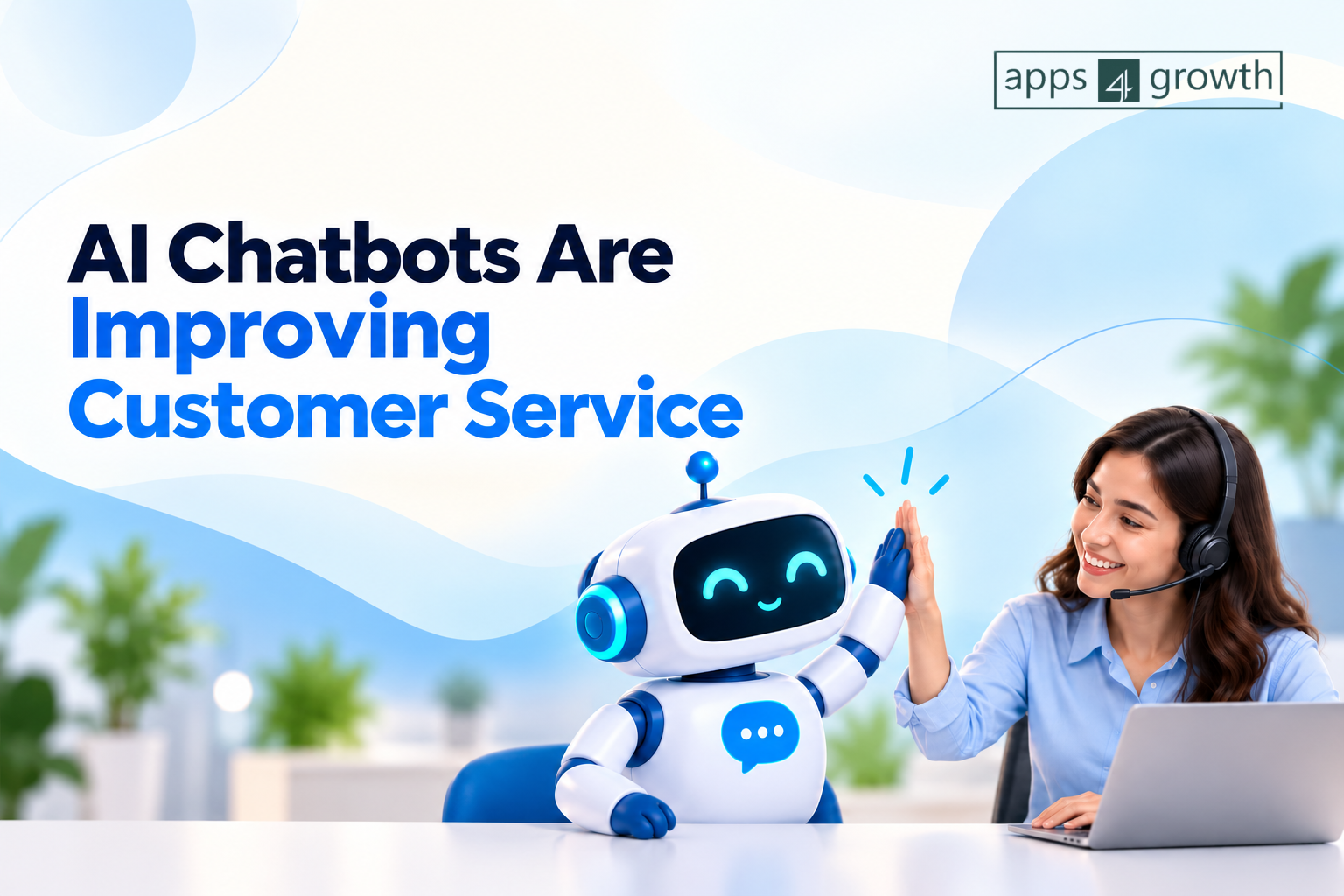
AI Chatbots Aren’t Replacing Customer Service – They’re Improving It
Customer service has changed significantly over the years. Today, customers expect quick responses, personalized assistance, and support whenever they need it. However, managing every customer interaction manually can be challenging, especially for businesses handling large volumes of enquiries. This is where AI chatbots are making a difference.
Although some people believe that AI chatbots will eventually replace human customer service representatives, the reality is quite different. Instead, AI chatbots in customer service are helping businesses automate repetitive tasks, reduce response times, and improve customer experiences. Meanwhile, human agents can focus on complex issues that require empathy, critical thinking, and personal attention.
Therefore, rather than replacing customer service teams, AI chatbots are becoming valuable tools that help them work more efficiently.
1. Why Customer Service Needs to Evolve
Customer expectations are constantly increasing. Previously, customers were often willing to wait for an email response or speak to an agent during business hours. Today, however, they expect businesses to provide assistance across websites, mobile applications, social media, and messaging platforms.
As a result, traditional customer support systems can struggle to keep up with growing demand.
Some common customer service challenges include:
- Delayed responses: Customers may have to wait hours or even days for answers.
- High support volumes: Customer service teams often receive repetitive enquiries about orders, payments, returns, and account information.
- Limited availability: Traditional support teams may not operate around the clock.
- Increasing operational costs: Hiring and training additional support representatives requires time and resources.
- Inconsistent experiences: Different agents may provide different answers to similar customer questions.
Consequently, businesses need solutions that make customer support faster, more accessible, and more consistent. AI chatbots help address these challenges by handling routine interactions and supporting human agents.
2. How AI Chatbots Improve Customer Service
AI chatbots use artificial intelligence, natural language processing (NLP), and machine learning to understand customer queries and generate relevant responses. Unlike basic rule-based chatbots, advanced AI-powered systems can interpret different ways of asking a question and use conversational context to provide more useful assistance.
Here is how they improve customer service.
24/7 Customer Support
Customers do not always need assistance during standard business hours. For example, someone shopping online late at night may want to check an order or understand a return policy.
With AI chatbots, businesses can provide automated assistance at any time. Consequently, customers can receive answers without waiting for a support representative to become available.
Moreover, round-the-clock availability helps businesses serve customers across different time zones.
Faster Responses to Customer Queries
Response time plays an important role in customer satisfaction. When customers have to wait too long, they may become frustrated or abandon a purchase.
AI chatbots can respond to common questions almost instantly. For instance, they can provide information about:
- Product availability and specifications
- Order tracking and delivery updates
- Payment methods and transaction status
- Refund and return policies
- Account registration and password assistance
As a result, customers receive quick answers, while support teams spend less time handling repetitive requests.
Handling Repetitive Customer Enquiries
Many customer service departments receive similar questions every day. Although these queries are important, answering them manually can consume a significant amount of an agent’s time.
AI chatbots can automate these routine interactions. For example, they can explain shipping policies, share account information, guide customers through basic troubleshooting, and provide frequently requested details.
Therefore, human representatives can dedicate more time to complex customer concerns instead of repeatedly answering the same questions.
Personalized Customer Experiences
Modern AI chatbots can use relevant customer information and conversation history to make interactions more contextual.
For instance, an e-commerce chatbot may recommend products based on previous purchases, browsing behaviour, or stated preferences. Similarly, a banking chatbot may guide an authenticated customer towards relevant account information.
However, personalization must be supported by appropriate consent, access controls, and data protection practices. When implemented responsibly, it can make customer interactions more relevant and convenient.
Consistent Information Across Channels
Customers may contact a business through its website, WhatsApp, social media, or mobile application. However, receiving different answers across these platforms can create confusion.
By integrating AI chatbots with approved knowledge sources and business systems, companies can provide more consistent information across customer touchpoints.
Additionally, a connected chatbot can help maintain context when a customer moves between supported channels, provided that the integration is designed to preserve the conversation appropriately.
3. AI Chatbots and Human Agents: Better Together
One of the biggest misconceptions about AI chatbots is that businesses can use them to eliminate human customer service teams. In reality, effective customer support often depends on collaboration between automation and human expertise.
While chatbots are useful for routine enquiries, human agents remain essential for situations that require emotional understanding, judgement, negotiation, or individual attention.
Consider the following comparison:
| Customer service task | AI chatbot | Human agent |
|---|---|---|
| Answering FAQs | Handles routine questions | Handles unusual or detailed queries |
| Order tracking | Provides automated updates | Investigates delivery problems |
| Basic troubleshooting | Guides users through standard steps | Resolves complicated technical issues |
| Product recommendations | Suggests options using available data | Provides personal advice |
| Customer complaints | Collects details and routes cases | Handles sensitive or escalated complaints |
| Emotional support | Offers limited conversational assistance | Provides empathy and human understanding |
As this comparison shows, both have different strengths. Therefore, businesses should build customer service systems where AI handles suitable routine tasks and human agents take over when personal attention is required.
4. The Importance of Human Handover in AI Customer Support
Although AI chatbots can resolve many common enquiries, they should not attempt to handle every situation independently.
For example, a customer dealing with a failed payment, disputed transaction, or complicated complaint may need assistance from a human representative.
This is where human handover becomes important.
A well-designed AI chatbot should:
- Recognize when a query is too complex to resolve automatically.
- Identify situations that require human intervention.
- Transfer the conversation to the appropriate support team.
- Share relevant conversation details so customers do not need to repeat everything.
- Allow the human agent to continue the interaction with sufficient context.
Furthermore, businesses should provide a clear way to contact a human representative when automated assistance is not suitable.
Consequently, customers can benefit from the speed of AI while retaining access to personal support whenever necessary.
5. Real-World Applications of AI Chatbots Across Industries
AI chatbots are useful across different industries because customer enquiries vary depending on the products and services being offered.
Here are some practical applications.
E-commerce and Retail
Online retailers receive frequent questions about product availability, delivery schedules, payment options, and returns.
AI chatbots can help customers find product information, check order status, understand return policies, and receive shopping recommendations. Additionally, they can guide users through common purchasing issues.
As a result, businesses can improve the shopping experience while reducing pressure on customer support teams.
Banking and Financial Services
Banks and financial institutions handle enquiries related to account information, transaction updates, card services, and general banking procedures.
AI chatbots can provide approved account assistance, explain common banking processes, and guide customers towards relevant services.
However, sensitive financial actions must follow appropriate authentication, authorization, and security requirements. Therefore, chatbots should not expose confidential account information or perform restricted activities without suitable safeguards.
Healthcare
Healthcare organizations receive enquiries about appointment scheduling, clinic timings, service availability, and general patient information.
AI chatbots can help patients navigate these services, find relevant information, and manage appointment-related interactions.
Nevertheless, healthcare chatbots must be designed carefully. They should protect personal information and avoid presenting unverified responses as professional medical advice.
Travel and Hospitality
Travel companies regularly handle questions about bookings, cancellations, check-in procedures, and travel schedules.
AI chatbots can provide booking information, explain policies, share itinerary details, and assist with common travel enquiries.
Moreover, they can help customers access support outside regular office hours, making the overall experience more convenient.
Telecommunications
Telecommunication companies often receive enquiries about billing, recharge options, network issues, service plans, and technical problems.
AI chatbots can answer routine questions, guide customers through basic troubleshooting, and direct complicated technical issues to the relevant support team.
Thus, they help manage high enquiry volumes without requiring agents to handle every interaction manually.
6. AI Chatbots vs Traditional Rule-Based Chatbots
Not every chatbot uses advanced artificial intelligence. Traditional rule-based chatbots follow predefined scripts and decision paths, whereas AI-powered chatbots can interpret natural language and respond more flexibly.
Understanding the difference helps businesses select the right solution.
| Feature | Rule-Based Chatbots | AI-Powered Chatbots |
|---|---|---|
| Response method | Predefined rules and scripts | AI-generated or AI-selected responses |
| Query understanding | Limited to configured patterns | Can interpret varied natural language |
| Flexibility | Works within fixed conversation paths | Adapts to different conversational contexts |
| Personalization | Usually limited | Can use approved customer context |
| Complex queries | Often struggles outside predefined flows | Can handle more varied requests, with limitations |
| Learning and improvement | Requires manual rule updates | May improve through evaluation and suitable model updates |
| Integration | Often supports basic workflows | Can connect with business systems and tools when configured |
However, AI-powered chatbots are not automatically more accurate in every situation. Their performance depends on the quality of training or reference data, system design, integrations, and ongoing monitoring.
Therefore, businesses should choose chatbot technology based on their actual customer service requirements rather than simply selecting the most advanced option.
7. Key Features of an Effective AI Customer Service Chatbot
To deliver meaningful results, an AI chatbot should do more than generate automated replies. Instead, it should support real customer service workflows.
Some important features include:
- Natural Language Processing: Helps the chatbot understand customer questions expressed in everyday language.
- Multilingual Support: Allows businesses to assist customers in different languages.
- CRM Integration: Connects customer interactions with relevant customer relationship management records.
- Omnichannel Support: Enables chatbot interactions across websites, mobile apps, and supported messaging platforms.
- Automated Ticket Creation: Converts unresolved queries into support tickets for follow-up.
- Human Handover: Transfers complex enquiries to the appropriate support representative.
- Conversation History: Helps maintain relevant context across supported interactions.
- Analytics and Reporting: Tracks response times, common queries, resolution rates, and customer feedback.
- Knowledge Base Integration: Uses approved business information to provide relevant answers.
- Security and Access Controls: Protects customer information through appropriate authentication, permissions, and data handling practices.
In addition, businesses should regularly review chatbot responses to identify inaccurate information, unresolved queries, and opportunities to improve the customer experience.
8. How AI Chatbots Help Businesses Reduce Customer Service Costs
Customer support can become expensive as a business grows. More customers generally mean more enquiries, additional support staff, and greater operational requirements.
AI chatbots can help control these costs by automating suitable repetitive tasks.
For example, instead of assigning an agent to answer every order-status enquiry, a chatbot integrated with an order management system can retrieve the relevant information and respond automatically.
Similarly, chatbots can guide customers through common troubleshooting steps, reducing the number of routine support interactions that require manual attention.
However, cost savings depend on implementation quality, integration expenses, licensing, maintenance, and the percentage of enquiries that can genuinely be automated.
Ultimately, the objective should not be to eliminate human support. Rather, it should be to use available resources more effectively while maintaining service quality.
9. Challenges Businesses Should Consider Before Implementing AI Chatbots
Despite their benefits, AI chatbots also come with certain limitations. Therefore, businesses should understand the potential challenges before introducing them into their customer service operations.
Inaccurate or irrelevant responses: AI chatbots may sometimes misunderstand queries or provide incorrect information. To reduce this risk, businesses should use reliable knowledge sources, test responses, and establish escalation procedures.
Data privacy and security: Chatbots may process personal or sensitive customer information. Consequently, businesses must implement suitable access controls, encryption, data retention policies, and security monitoring.
Lack of human empathy: Although AI can recognize conversational patterns, it cannot fully replace genuine human understanding. Therefore, sensitive or emotionally complex interactions should be directed to trained representatives.
Integration difficulties: Connecting chatbots with CRM platforms, ERP systems, order management software, and other business applications can require technical planning. Moreover, poorly designed integrations may create inaccurate or outdated responses.
Continuous monitoring: Customer needs, products, and business policies change over time. As a result, chatbot knowledge sources, workflows, and response quality must be reviewed regularly.
By addressing these challenges early, businesses can build more reliable and useful AI-powered customer support systems.
10. The Future of Customer Service: AI and Human Collaboration
Customer service is moving towards a more connected and intelligent model. As AI technology continues to develop, chatbots are expected to become more capable of understanding customer intent, retrieving relevant information, and supporting complex business workflows.
For instance, AI agents may increasingly help customers complete multi-step tasks, such as checking an order, initiating a return request, and creating a support ticket within a connected system.
Furthermore, conversational AI can help support representatives by summarizing customer interactions, suggesting relevant information, and identifying common issues.
However, human involvement will remain important, particularly when customers need reassurance, personal judgement, or assistance with sensitive matters.
Therefore, the future of customer service is unlikely to be entirely automated. Instead, it will involve a combination of AI-powered efficiency and human expertise.
11. How Apps4Growth Helps Businesses Build Intelligent Customer Support Solutions
Implementing AI chatbots requires more than selecting an AI model. Businesses must also consider their customer service workflows, existing software, integration requirements, data security, and long-term scalability.
At Apps4Growth, businesses can explore custom digital solutions designed around their operational requirements and customer experience goals.
Depending on the project scope, this may include AI chatbot development, website and mobile application development, CRM integration, API development, workflow automation, and custom software engineering.
Moreover, connecting chatbot solutions with existing business systems can help streamline customer interactions, improve information accessibility, and reduce repetitive manual work.
As customer expectations continue to evolve, businesses can benefit from adopting technology that supports both automated assistance and meaningful human interactions.
Explore digital solutions at Apps4Growth.
Conclusion
AI chatbots are not replacing customer service. Instead, they are changing how businesses deliver it.
By handling repetitive enquiries, providing faster responses, supporting customers around the clock, and connecting with business systems, AI chatbots help customer service teams work more efficiently.
Nevertheless, human agents remain essential for complex problems, sensitive conversations, and situations that require empathy and individual attention.
Ultimately, the most effective customer service strategy combines the speed of AI with the understanding of human representatives. Businesses that adopt this balanced approach can improve customer experiences while building more efficient and scalable support operations.
Frequently Asked Questions (FAQs)
1. Are AI chatbots replacing customer service representatives?
No. AI chatbots primarily automate repetitive enquiries and provide quick assistance. However, human representatives remain important for complex issues, sensitive complaints, and interactions that require empathy and judgement.
2. How do AI chatbots improve customer service?
AI chatbots improve customer service by providing faster responses, offering round-the-clock assistance, handling common enquiries, supporting personalization, and reducing repetitive work for human agents.
3. Can AI chatbots handle complex customer queries?
Advanced AI chatbots can understand and assist with a wider range of questions. However, they may not resolve every complex issue accurately. Therefore, businesses should include human handover options for situations requiring additional expertise.
4. What industries can benefit from AI chatbots?
Industries such as e-commerce, banking, healthcare, travel, hospitality, telecommunications, education, and retail can use AI chatbots to automate customer interactions and improve support accessibility.
5. What is the difference between AI chatbots and rule-based chatbots?
Rule-based chatbots follow predefined scripts and decision paths. In contrast, AI chatbots use artificial intelligence and natural language processing to interpret customer queries and generate more flexible responses.
6. Can AI chatbots integrate with CRM software?
Yes. AI chatbots can integrate with CRM platforms through APIs and other supported integration methods. As a result, businesses can retrieve relevant customer information, record interactions, and streamline support workflows, subject to appropriate permissions.
7. Are AI chatbots secure for customer service?
AI chatbots can be designed with security measures such as encryption, authentication, access controls, and data protection policies. However, security depends on the complete implementation, including the AI provider, integrations, infrastructure, and data handling practices.